The Wild Foraged Advantage
“A forest to bottle process is about making Nature's wisdom accessible to all .” - Tyler Davidson
The Wild Foraged Advantage 🍄
Do humans really do it better? This is an important question to pose in the modern age of cultivation of nearly all plant, animal, and fungi species for human consumption or industry. While there are certainly advantages to cultivation and domestication of once wild species, what are we losing in that process? When it comes to fungi, there are a plethora of fungi that rather than being foraged from the wild, are grown in sterile farms primarily grown on grain substrates. In this article we explore the concepts behind domestication and cultivation of fungi versus wild foraged specimens, answering the question “Do humans really do it better, or does nature do it best?”
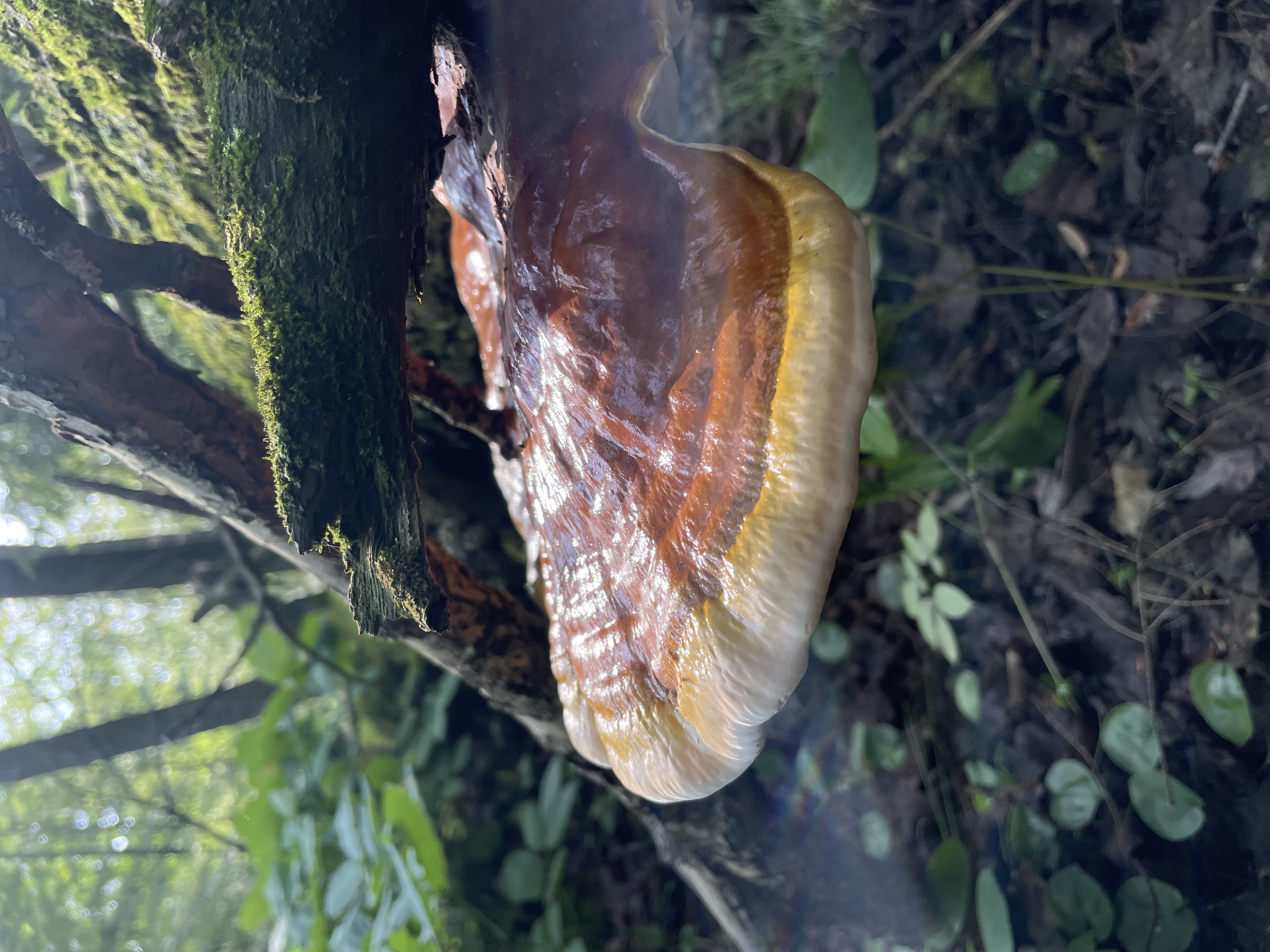
While an advantage of modern cultivation allows us to scale up in quantity, and the accrual of that quantity at a much higher, more reliable rate, of which certainly comes with benefits, we must consider that while we are taking shortcuts to nature’s processes that we are inevitably receiving a different end product than something grown naturally in the wild. In a study 10 wild foraged species of mushrooms were collected and compared with their total phenol, antioxidant, and flavonoid contents, and it was determined through the researchers’ analyses that the wild foraged specimens had higher amounts of each of these important nutritional cofactors as compared to cultivated species (Srikram & Supapvanich, 2016). Phenol compounds, antioxidants, and flavonoids are groups of the same kinds of compounds we seek from our everyday foods, such as apples, squash, or berries. A lack of presence of these compounds in a diet can lead to early aging, hormone imbalances, and autoimmune conditions. One other finding of note in this study was that fiber content showed to be higher amongst wild species, which is important for digestive health (1).
While difficult to study, a theory behind this phenomenon of “nature does it best” is due to the concept of hormesis, which is a biological concept of adaptation referring to stress being either the reason something grows stronger, bigger, or in this case, more nutritional, or weaker, smaller, or less nutritional (Mattson, 2008). Think of exercise, when we do this we are stressing our body to the degree in which our muscles become stronger for the next time, and can handle longer or higher amounts of tension, whether it be weight or distances traveled. Much of the same applies in nature!
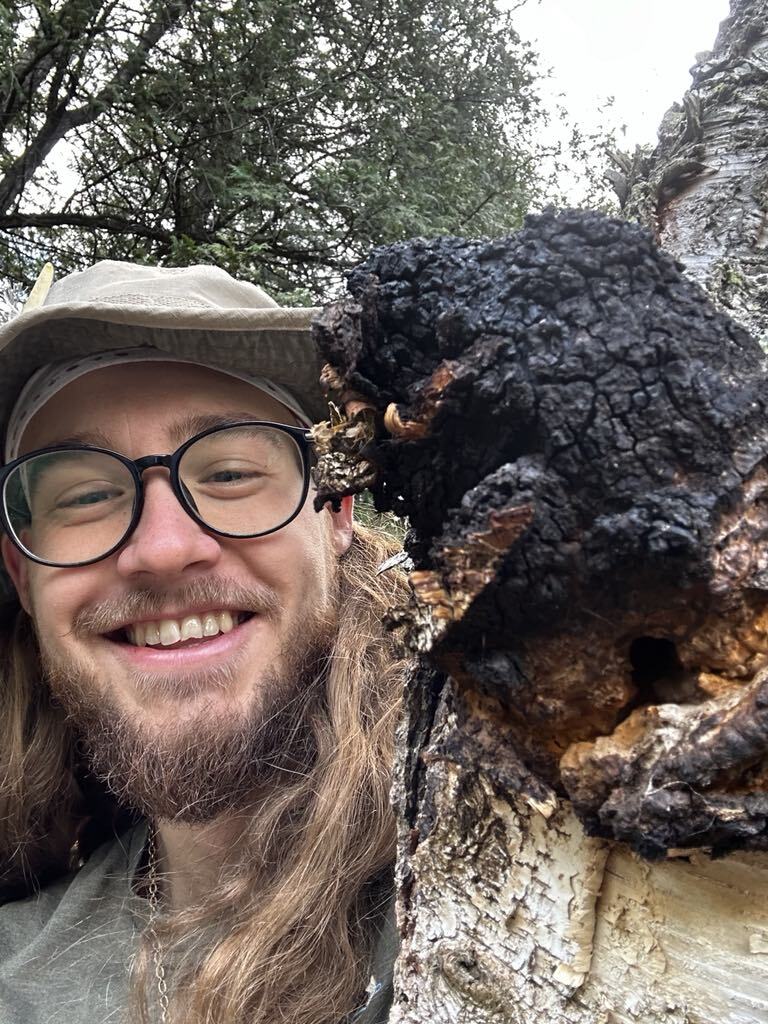
I’m Tyler Davidson, founder of Elden Medicinals, a board-certified holistic health coach, nutritional therapist, and author of Wild Healing with Medicinal Mushrooms: Therapeutic Use & Foraging. I created Elden Medicinals to offer natural, research-backed mushroom remedies that reconnect you with your vitality. You can find my book and subscribe to my newsletter at eldenmedicinals.org, and follow along on social media @eldenmedicinals for mushroom, foraging, and holistic health education. In this photo is me with chaga!
The exposure to the elements creates a positive adaptation in wild species of fungi that cultivated ones grown in sterile labs simply do not have to undergo. This can result in an end product that has a lower diversity or amount of health supporting compounds that we are looking for when we ingest mushrooms! This concept is exemplified in a study where researchers examined the mycelia of wild chaga (Inonotus obiliquus) and cultivated chaga mycelia in terms of its sterol content. For reference, sterols are compounds that are crucial for our health and are a part of our cellular membranes, and relates to our hormone health, vitamin D, and our liver functioning and much more (Malik, N.A). The researchers found that the wild chaga had 12 types of sterol compounds, whereas the cultivated mycelia contained 3 (Zheng et al., 2007). This led the researchers to postulate that “Harsh growth conditions in field environments (i.e. temperature variation, UV irradiation etc.)” can lead to diversification of compounds that otherwise would not be created in a more controlled environment. (3). It is a well known fact in nutrition that we want to consume a variety of foods to help ensure we cover all of our nutritional needs and to age gracefully with minimal disease or sickness. Much is the same for our fungi friends when exposed to the elements of nature! They become stronger, so that we can become stronger too.
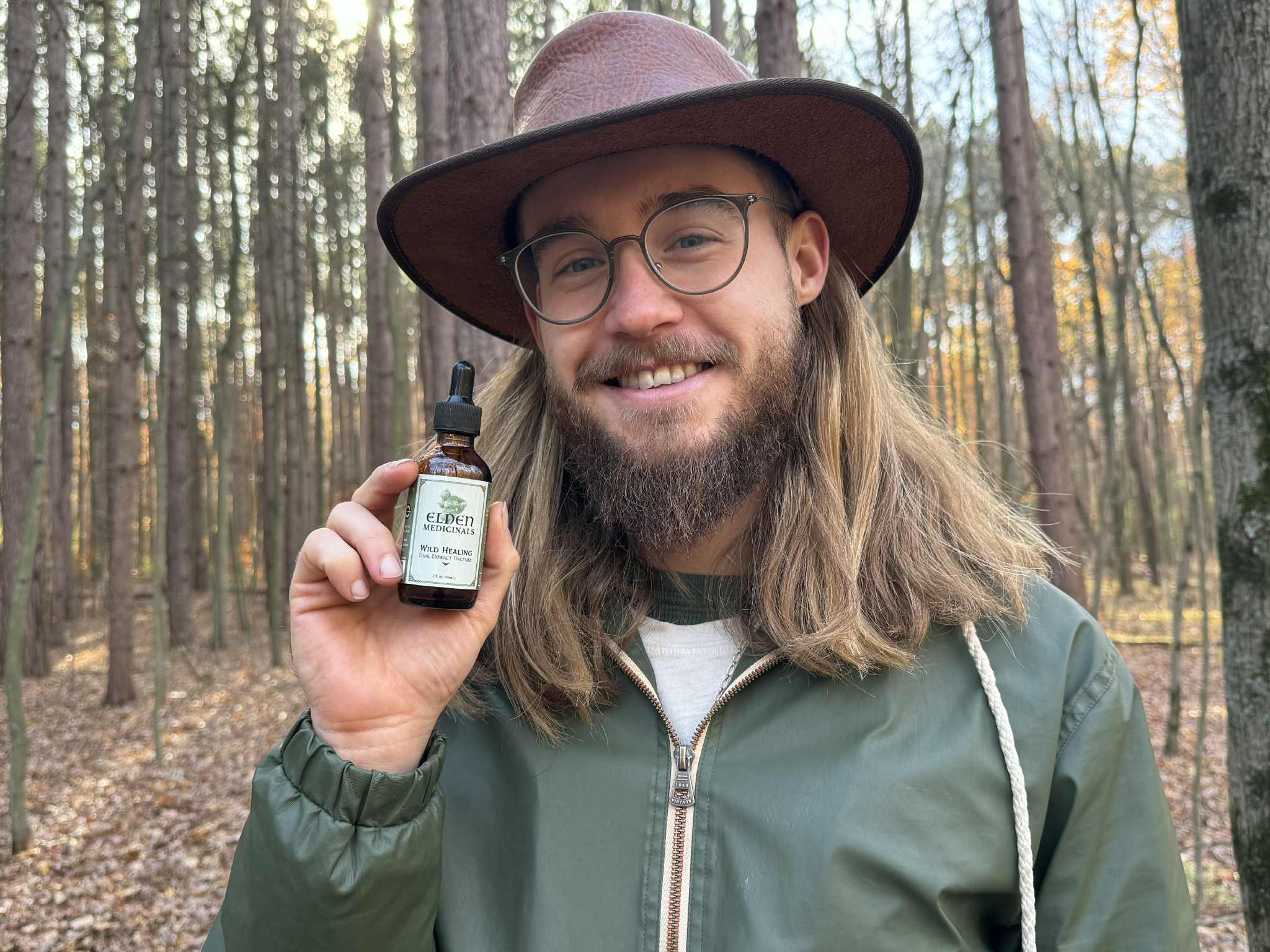
Nature does it best. While there are specific advantages to modern cultivation, there is so much we still do not understand that nature has figured out quite a long time ago. We can trust in the wisdom of nature to help provide for our needs. This is why I sustainably forage as much fungi as I can from clean and natural woodlands, creating my tinctures from forest to bottle, to pack the most diversity and quantity of health-giving compounds in a bottle as possible. Nature’s wisdom, in a bottle!
To dive deeper into this topic, you can consider purchasing my book Wild Healing with Medicinal Mushrooms: Therapeutic Use & Foraging as well as follow me on Instagram, Facebook, and Youtube for education on mushrooms, foraging, and holistic health! If you're interested in wild-foraged mushroom dual-extracts made properly. Check out my store!
Mush love and happy shroomin'!
-Tyler
Sources
Mattson M. P. (2008). Hormesis defined. Ageing research reviews, 7(1), 1–7. https://doi.org/10.1016/j.arr.2007.08.007
Muhammad Arif Malik. (2023, September 21). 6.7: Sterols. Chemistry LibreTexts. https://chem.libretexts.org/Bookshelves/Introductory_Chemistry/Introduction_to_Organic_and_Biochemistry_(Malik)/06%3A_Lipids/6.07%3A_Sterols#:~:text=Cholesterol%20is%20the%20most%20abundant,bile%20acids%2C%20and%20vitamin%20D.
Srikram, A., & Supapvanich, S. (2016). Proximate Compositions and Bioactive Compounds of Edible Wild and Cultivated Mushrooms from Northeast Thailand. Agriculture and Natural Resources, 50(6), 432–436. https://doi.org/10.1016/j.anres.2016.08.001
Zheng, W. F., Liu, T., Xiang, X. Y., & Gu, Q. (2007). Sterol composition in field-grown and cultured mycelia of Inonotus obliquus. Yao xue xue bao = Acta pharmaceutica Sinica, 42(7), 750–756.